
Feeding · compatibility explained
Microchip feeder or RFID feeder: what is the difference?
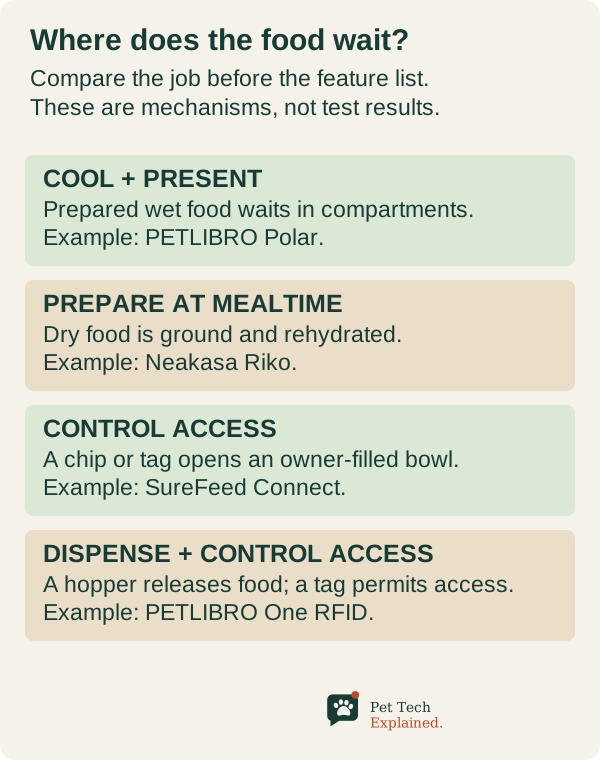
SureFeed Connect can recognise an implanted microchip. PETLIBRO One uses its own collar tag. Only the latter also dispenses dry food from a hopper.
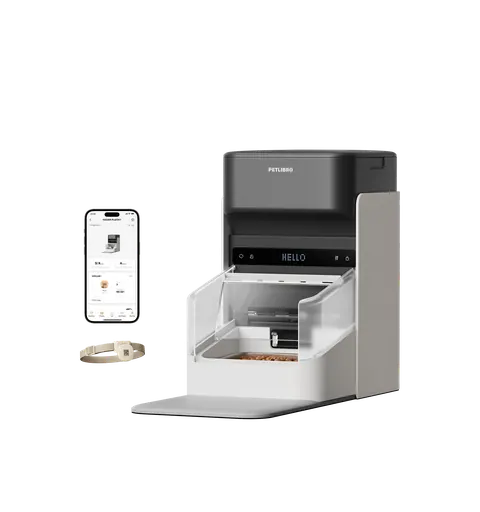
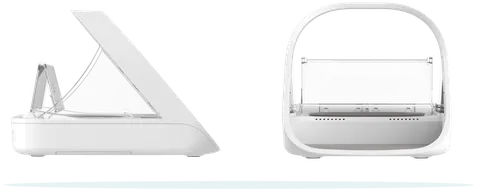
A feeder that recognises a pet does not necessarily dispense its meals. Recognition controls who can reach the food. Dispensing controls when a portion leaves a hopper. These are separate functions.
Two products, two feeding routines
| Question | SureFeed Connect | PETLIBRO One RFID |
|---|---|---|
| How is the pet recognised? | Compatible implanted microchip or RFID collar tag | Supplied compatible collar tag; implanted chips are not supported |
| Who portions the food? | The owner fills the bowl | The dispenser releases dry food from its hopper |
| What is the connected dependency? | A Hub is needed for connected functions | The app manages feeding settings; tag recognition is a separate function |
One tag per feeder: PETLIBRO’s FAQ says One pairs with a single collar tag. Selective feeding in a multi-pet home does not mean one unit recognises several tagged pets.
If your pet already has a microchip
Do not assume every product labelled RFID can read it. PETLIBRO explicitly rules out implanted microchips for One. SureFeed’s mechanism is designed for compatible implanted chips as well as tags. Verify the supported chip type for the individual pet.
If you want meals served while you are away
Opening a lid over a bowl is not the same as releasing a fresh measured portion. Start with the routine you need: restricting access to food you have already provided, or dispensing portions on a schedule. Neither mechanism establishes how well it prevents another pet approaching alongside the recognised animal; we have not tested that behaviour.
For a retail demonstration
Show the identification method, then show how food reaches the bowl. Demonstrating those two steps is more informative than calling both products smart feeders. Confirm the regional package separately: the UK listing offers Connect, but the chosen package still needs to specify whether a Hub is included.
Choosing a wet-food routine? Compare cooling prepared food with preparing a meal from dry food.
Two cats: one feeder does not mean two identities
For two separately controlled dry-food stations, plan the access rule for each cat before choosing hardware. One RFID pairs with one dedicated tag; two cats needing separate allocations therefore need separate compatible stations, rather than two tags on one unit. PETLIBRO specifies more than 25 cm between its RFID feeders to reduce interference.
Its backup batteries keep scheduled meals running during an outage, but disable Wi-Fi. That is a different promise from receiving app updates throughout the outage. These are documented behaviours, not tests of whether another cat can steal food.
Explore the technology
Sure Petcare · SureFeed Microchip Pet Feeder Connect
Source-based explanation; product performance claims remain attributable to their sources.