
Feeding · technology explained
Two wet-food feeders. Two very different jobs.
Start with what goes into the machine: ready-made wet food and freeze-dried ingredients create different routines.
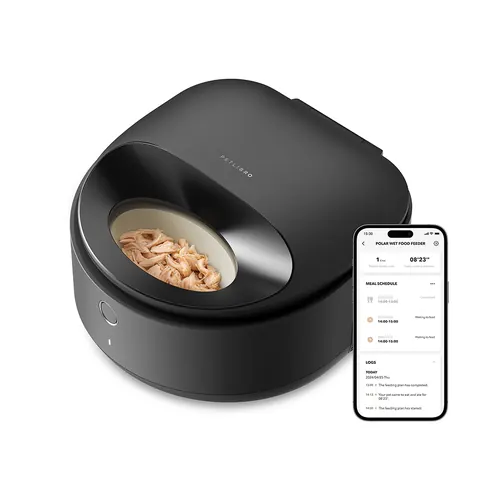
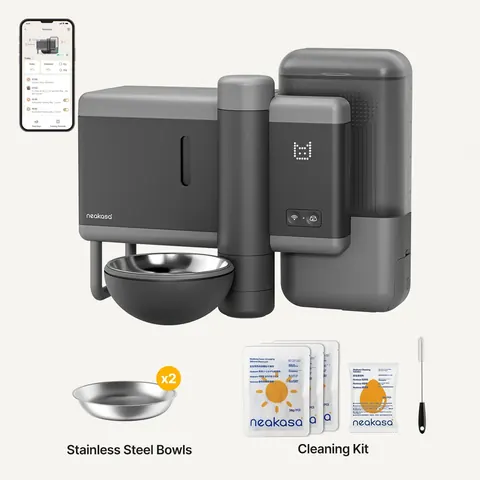
A product category can hide an important difference. PETLIBRO lists Polar as a wet-food feeder. Neakasa describes Riko as a system that grinds and rehydrates compatible freeze-dried food. They should not be compared as if they handle the same input.
| Device | You load | The machine does |
|---|---|---|
| PETLIBRO Polar | Prepared wet food in portions | Cools stored portions and opens access at scheduled times |
| Neakasa Riko | Compatible freeze-dried food and water | Grinds and rehydrates food |
Start with the food format
For an owner, the first question is whether the device fits the food and routine they intend to use. For a retailer, it is whether the product can be explained accurately on a shelf, in a demonstration or on a product page.
Neakasa's documentation says Riko uses room-temperature water. It is not a cooker. The preparation mechanism does not remove the need to check food compatibility, clean the equipment and deal with leftovers.
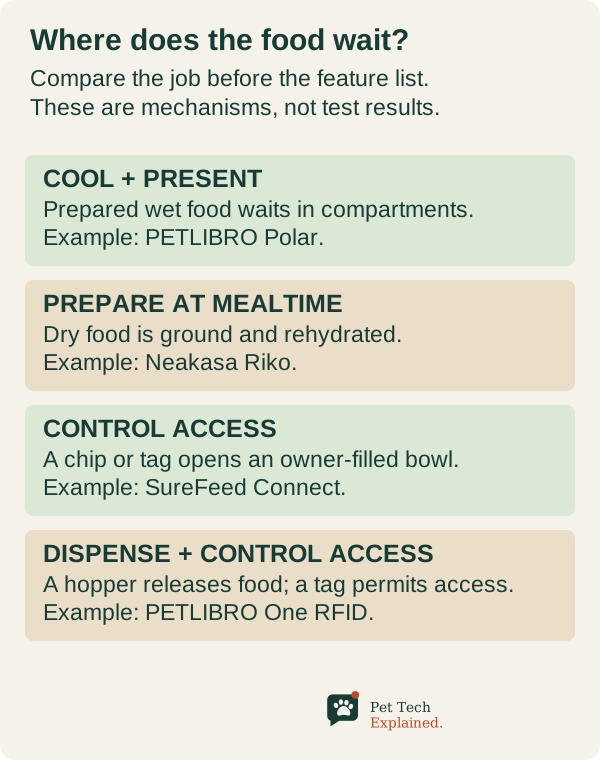
Where does the food wait?
Polar holds food that is already wet, so storage conditions matter before the meal. Riko keeps the food dry until preparation. Neither approach removes cleaning or dealing with leftovers.
A third route is an owner-filled, access-controlled bowl such as SureFeed Connect. Its lid controls access; it is not active refrigeration or a hopper dispenser. Compare recognition and dispensing.
Compare the whole routine
- Before a meal: what food can go into the device, and what preparation does the owner do?
- At feeding time: does it dispense, uncover or prepare food?
- Afterwards: which parts need cleaning, and what happens to uneaten food?
- When something fails: what happens if power, connectivity or a mechanical part is unavailable?
What this means for a retail range
Group products by the job they perform before comparing headline features. A retailer could carry both approaches for different customers, but should establish the exact local package, consumables, training and support burden first. This is an editorial ranging hypothesis, not evidence of sales demand or margin.
Neither device has been physically tested by this publication. This comparison explains mechanisms; it does not rank food safety, reliability or pet acceptance.
Cooling and power cuts: read the details
PETLIBRO describes Polar’s cooling under specified room conditions. That does not establish refrigerator-equivalent storage. Its UK listing also gives conflicting eight-hour and twelve-hour descriptions of power-outage protection. We have not used either figure as a confirmed specification, or assumed backup power keeps the cooling running.
For a retailer, this is a specific question to resolve with the supplier before promising unattended coverage. For an owner, it is a reason to distinguish scheduled access from continued cooling.
Explore the technology
PETLIBRO · Polar wet-food feeder
Source-based explanation; product performance claims remain attributable to their sources.